
"1930s China"
70 article(s) found

The Marketing and Management of Nestle Coffee Coffee Brand Management
Perhaps most of the domestic public's understanding of Nestle coffee comes from its well-known slogan. It started. In fact, many people in the industry are also familiar with one of its classic anecdotes, that is, at the beginning of its birth, Nestle Coffee once caused a sales crisis by overemphasizing the convenience (instant) brought about by its technological breakthrough. The reason is that many housewives are unwilling

A textual Research on the early introduction of Coffee in Taiwan in 1884
1.1 in May 2004, the author visited Gukeng in Yunlin County and Alishan Coffee growing area in Chiayi County, Taiwan. In November 2009, I once again visited Gukeng in Yunlin County and Dongshan Coffee growing area in Tainan County, Jianhu Mountain World Coffee Museum, and visited the World Coffee Exhibition in Taipei and the National Museum of Taiwan History. 1.2 before the 16th century, Westerners had roots on the dinner table
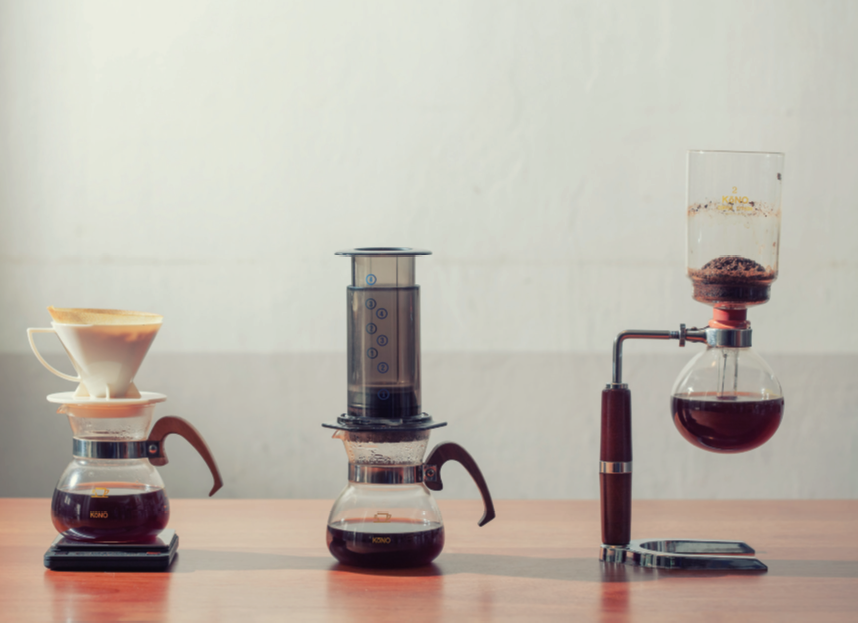
Analytical immersion extraction! The simplest way to brew coffee ── classic siphon pot
For the exchange of professional baristas, please pay attention to the immersion extraction method in the coffee workshop (Wechat official account cafe_style). As the name implies, its principle is to let the coffee powder soak in a container and interact with hot water for a period of time to dissolve and spread to release the flavor and aromatic substances of the coffee smoothly, and to complete the extraction before the miscellaneous flavor is precipitated.
Classic siphon pot operation skills | how to make siphon coffee at home
For the exchange of professional baristas, please pay attention to the immersion extraction method in the coffee workshop (Wechat official account cafe_style). As the name implies, its principle is to let the coffee powder soak in a container and interact with hot water for a period of time to dissolve and spread to release the flavor and aromatic substances of the coffee smoothly, and to complete the extraction before the miscellaneous flavor is precipitated.

Siphon pot coffee brewing skills | introduction of siphon pot utensils that coffee fans need to know
Analytical immersion extraction! The simplest coffee brewing method, ── classic siphon pot immersion extraction, as the name implies, its principle is to let the coffee powder soak in a container, interact with hot water for a period of time, dissolve and spread to release the flavor and aroma of coffee smoothly, and complete the extraction before the miscellaneous flavor is precipitated.

The history of coffee in Taiwan: most of it is inherited from the Japanese era
Professional barista communication Please pay attention to the coffee workshop (Wechat official account cafe_style) most of Taiwan's coffee history is inherited from the Japanese era, although the early Dutch and British once occupied Taiwan, but did not leave much historical traces about coffee. Coffee trees were also planted during the Japanese occupation era, and the Japanese Industry Bureau introduced coffee from Hawaii in order to develop cash crops.
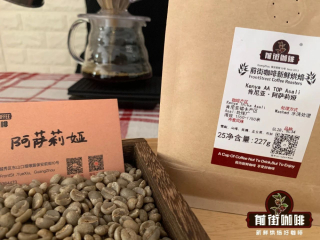
Introduction to the types of coffee beans in Kenya, grown in coffee-producing areas in Kenya
Following Caf é (official Wechat account vdailycom) found that the Beautiful Caf é opened its own shop in 1878, when the British brought coffee to Africa and set up a coffee plantation in Kenya in the 19th century, when Ethiopian coffee drinks were imported to Kenya through Southern Yemen.
Introduction to the main producing areas of Kenyan coffee beans the flavor and taste of Kenyan K72 water-washed coffee beans
Kenya Coffee producing areas Kenya is most famous for its seven largest coffee producing areas: Thika, Kirinyaga, Mt.KenyaWest, Nyeri, Kiambu and Ruir.
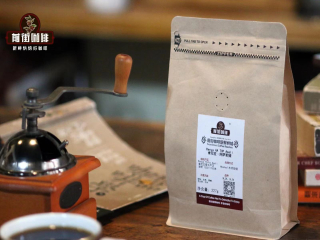
How to brew Kenyan coffee, how to brew Kenyan coffee beans correctly
Following Kaibei (official Wechat account vdailycom) found that the beautiful cafe opened a small shop of its own to flush pots and pots, preferably with a thin mouth, to facilitate the control of water flow and direction. You can choose Japanese brands with relatively high prices, such as KALITA, HARIO, Taguchi and Moon Rabbit, or you can choose

A detailed introduction to the establishment, historical origin and current situation of the International Coffee Organization
The International Coffee Organization is an intergovernmental organization founded in London in 1963. It is composed of coffee importers and exporters. The organization is responsible for implementing the International Coffee Convention and is committed to improving the situation of the world coffee industry through international cooperation. Organizational and functional editorial contributions the International Coffee Organization has made a special contribution to the world coffee industry through: (1) organizing regular high-level meetings

The spread of Coffee Coffee Culture of Coffee all over the World
The Discovery and spread of Coffee how was coffee discovered? When people taste mellow coffee, they can't help but ask such questions. According to Roth de Neroy, a Roman linguist, around the sixth century AD, an Arab shepherd named Caldai was very excited and excited to see every goat when he went to graze on the grasslands of Ethiopia. It made him

Differences, distinctions and awards of individual beans in Brazilian coffee
Exchange of professional baristas please follow the coffee workshop (Wechat official account cafe_style) Brazilian coffee individual bean differences, distinction and award situation in addition, 80% of Brazilian coffee is dried coffee, the remaining 20% is semi-dried and washed. Its coffee taste characteristics are different, but high-quality coffee slightly tends to use semi-dry treatment. However, drying treatment

Brazilian Coffee Bean Variety Characteristics Region Treatment Flavor Description
Professional barista exchanges, please pay attention to coffee workshop (Weixin Official Accounts cafe_style ) Brazilian coffee varieties Although coffee has diversity, Brazilian coffee is suitable for public taste. For example: coffee produced in northern coastal areas has a typical iodine taste, reminiscent of the sea after drinking. This coffee is exported to North America, the Middle East and Eastern Europe. There's also something interesting and worth pursuing.

Grading, price, raw beans and baking curve of Brazilian coffee
For the exchange of professional baristas, please follow the coffee workshop (Wechat official account cafe_style) Brazilian coffee individual bean classification, price, raw beans and baking curve traditional wind selection props coffee advanced countries Brazil has not yet exported to Japan there are many kinds of coffee. Due to the domestic road traffic conditions, land transport is difficult, although it can produce fine coffee but can not circulate < CHAPADA DE M

The flavor of Brazilian coffee beans describes the historical characteristics of taste cultivation.
Professional baristas please pay attention to the coffee workshop (Wechat official account cafe_style) Brazilian coffee taste Brazilian coffee is a low-acidity, medium-roasted coffee beans from the World Coffee Center. As a kind of high-quality coffee, Brazilian coffee can be drunk individually or mixed. ● quality beans: Sangdo-style NO.2, size NO.18 ● flavor characteristics: mild, bitter medium,

History, culture, stories and allusions of Brazilian coffee boutique beans
For the exchange of professional baristas, please pay attention to the coffee workshop (Wechat official account cafe_style) the history and culture of Brazilian coffee boutique beans, stories and allusions the Brazilian coffee industry Brazil's main coffee growing area two large bags of coffee beans on coffee plantations in the state of Minas Gerais, taken in the state of Sao Paulo, Brazil's coffee industry accounts for about 1/3 of the world's total output, is the current world.

The characteristic varieties and flavors of Brazilian Coffee describe the planting History
Professional baristas exchange please follow the coffee workshop (Wechat official account cafe_style) Brazilian coffee characteristics of Brazilian coffee generally refers to the coffee produced in Brazil. There is a wide variety of Brazilian coffee, the vast majority of which are unwashed and sun-dried, classified according to the name of the state of origin and the port of transport. Brazil has 27 states and 17 states produce coffee, but four of them produce the most coffee.

Varieties of beans, brand recommendation and manor introduction of Brazilian coffee
The exchange of professional baristas please pay attention to the coffee workshop (Wechat official account cafe_style) Brazilian coffee single bean species, brand recommendation and manor introduction since the 1930s, the research on bean seeds has been limited by congenital conditions, and the Brazilian government has invested a lot of resources to improve varieties and disease resistance since the 1930s. Among them, the results of bean research still affect the planting habits of Latin America as a whole. Like him.
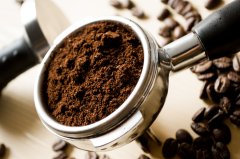
Flavor characteristics, producing areas and brewing parameters of single bean of Brazilian coffee
For the exchange of professional baristas, please pay attention to the coffee workshop (Wechat official account cafe_style) Brazilian coffee single bean flavor characteristics, production areas and brewing parameters in the elevation of 8501200m flat large coffee plantation cultivation of coffee, taste slightly smooth mostly neutral coffee. In contrast, the coffee produced in the mountains in Brazil is slightly higher above sea level and is affected by the sunshine on the slope of the hillside.

Brazilian coffee planting history will be less flavor to describe the characteristics of the producing area.
For the exchange of professional baristas, please follow the coffee workshop (Wechat official account cafe_style) Brazil is the largest country in Latin America and the largest coffee producer in the world in the past 150 years. 1/3 of the world's coffee comes from Brazil, followed by Vietnam, Colombia and Indonesia. The annual output of Minas Gerais province in the southeast alone (20 million bags) has surpassed that of neighboring Colombia.